Having carefully investigated everything from the beginning, I also have decided to write a careful account for you, most honorable Theophilus... of all that Yeshua began both to do and teach. (Luke 1:3, Acts 1:1)

Saturday, May 16, 2015

Series: In the Garden/Fruits in Scripture~The Olive

olives-357849_1280.png
The olive has been linked to many attributes in the biblical literature: beauty, health, power and stability, a good reputation, rituals, and the anointing of kings. Symbolically, it represents the Holy Spirit.

The fruit resembles a plum in shape and in color, being first green, then pale, and black when ripe. It is gathered by shaking the limbs, and by beating them with poles, the only tree allowed to be beaten, according to Scripture. Olive oil was used extensively among the ancient Hebrews. The best oil is from olives plucked before being fully ripe, and then beaten or squeezed.

It can be used in several ways immediately after being pressed from the fruit, and does not require refinement. It can be burned in lamps, used as a cooking agent, or used for anointing, to name a few. In the anointing of the head, it is to present someone, appointed by God, to serve as priest, prophet or king. In other instances of anointing, the whole body can be rubbed in oil.

In Exodus 20, God commands that the people bring pure olive oil so that the lamps may burn continually. In Jeremiah 11, the people of Israel are likened, by God, to a green olive tree, beautiful with goodly fruit.

The olive has the following properties:
  1. Evergreen
  2. Fire, drought and pest resistant
  3. Can produce fruit for a thousand years or more
  4. Stump regrows after felling, easy to grow from sprigs
  5. Produces fragrant edible oil that can also be used for lamp oil
  6. Produces beautiful hardwood fit for making utensils
olives-357851_1280.png
zayith: olive tree, olive
Original Word: זַ֫יִת
Part of Speech: Noun Masculine
Phonetic Spelling: (zay'-yith)
Short Definition: olive

from an unused root word Ziv: an olive
(Ziv: the second month of the Jewish calendar)
Original Word: זִו
Part of Speech: Proper Name Masculine
Phonetic Spelling: (zeev')
Short Definition: Ziv

from an unused root word: to be prominent, brightness


Monday, April 13, 2015

Series: In the Garden/Fruits in Scripture~The Fig

The Fig
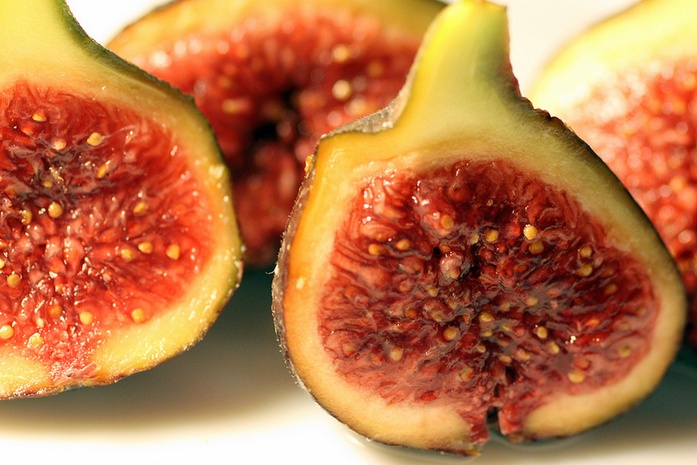
In ancient times, as well as today, figs were a prominent, yet inexpensive, food source in Israel. The fruit was used as examples and metaphors to teach us how to live, and the ways of God. Here are a few interesting facts. 

The fig has medicinal qualities, and was used on Hezekiah as a poultice, placed on the boil that had made him ill. In the law concerning the Sabbath, orchards of figs were to be left alone in the seventh year, so they could be eaten by the beasts of the field and gathered for food by the poor. 

Figs are mentioned as part of the “Seven Species” named in Deuteronomy 8:8, where Israel is described as a blessed land. In Proverbs 27:18, there is an analogy made between a person who tends a fig tree is allowed to eat the fruit and a person who cares for his master will be honored, implying that fig trees represent people of prominence and authority in ancient Israeli culture. In Hosea 9:10, the first-ripe fig, in its first season, is used to describe the Hebrew patriarchs. 

In Jeremiah 24, God uses good, edible figs as a metaphor for His people in leadership that obeyed Him, and rotten figs for King Zedekiah, who refused to obey the prophet Jeremiah. Micah, in chapter 7, likens figs to the characteristics of being Godly and upright.


In the Gospels, Yeshua curses a fig tree because it has no fruit. The early fig tree puts out fruit before it puts out leaves, so a fig tree with leaves should have had fruit on it. That tree was symbolic of a person of prominence being “all show” and no substance; e.i., a hypocrite. Yeshua cursed it to the root, because hypocrisy is rooted in evil.


Perhaps the most meaningful symbolism is found in the Hebrew etymology of the word fig.
bikkurah: the first ripe fig, early fig
Original Word: בִּכּוּרָה
Part of Speech: Noun Feminine
Phonetic Spelling: (bik-koo-raw')

from bakar: to bear new fruit, to constitute as first-born
Original Word: בָּכַר
Part of Speech: Verb
Phonetic Spelling: (baw-kar')
from a primitive root word: to burst the womb, i.e. to bear or make early fruit (of woman or tree); to give the birthright, to make firstborn, be firstling, bring forth first child (new fruit).

Sunday, October 26, 2014

Counterfeits of the Enemy

We know that for everything good that God puts forth on the earth and in the heavens, the Enemy has a counterfeit to entice and deceive God's people. We see the symbolism of various gods in our everyday life, that have become normal and routine, but the spiritual nature of these symbols, and the ungodly element that created them is still at their core. So, when we promote this symbolism through what we allow into our homes and lives, we are in essence promoting the Enemy, and giving him status above anything Godly that we have.  This is a simple comparison of the Roman/Greek gods that were hindrances to God's people all throughout Scripture, and continues to do the same today.

Apollo/Apollo

god of music, poetry, art, oracles, archery, plague, medicine, the sun, light and knowledge

symbols lyre, laurel wreath, python, raven, bow and arrows

Scriptural equivalent Lucifer/Satan

Scriptural attributes a god who could bring ill-health and deadly plague, dominion over colonists (ancient colonists: city-states founded from a mother-city (its "metropolis"), patron defender of herds and flocks, director of their choir, patron god of music and poetry

chapter/verse Isaiah 14/Ezek 28/Job 1&2


Bacchus, Liber/Dionysus

god of the grape harvest, wine making, wine, ritual madness, religious ecstasy, fertility and theatre.

symbols thyrsus ( a wand or staff of giant fennel covered with ivy vines and leaves, sometimes wound with taeniae(ribbon or headband) and always topped with a pine cone), grapevine, leopard skin, panther,cheetah

Scriptural equivalent Yeshua HaMashiach

Scriptural attributes only god to have a mortal mother; a dying-and-rising god refers to a deity which returns, is resurrected or is reborn, i.e. death-rebirth-deity


Ceres/Demeter

goddess of agriculture, fertility, sacred law and the harvest, and the cycle of life and death

symbols cornucopia, wheat, torch, bread

Scriptural equivalent Moses

Scriptural attributes divine order, unwritten law; “Law Bringer"


Caelus/Uranus

primordial god of the sky

symbols none

Scriptural equivalent fallen angels / watchers / prince of the power of the air

Scriptural attributes Uranus was a parent of the first generation of Titans (giants/Nephilim), and the ancestors of most of the Greek gods. Represents the earth, sky and Styx/Hades (hell)

chapter/verse Gen 10:8-10, Eph 2:2


Cupid/Eros

god of sexual desire and attraction, god of romantic love (emphasis on roman)

symbols bow, arrows, candles, hearts, cupids, wings and kisses/adult male who embodies sexual power

Scriptural equivalent the actions of fallen angels

Scriptural attributes mischievous interventions in the affairs of gods and mortals cause bonds of love to form, often illicitly

chapter/verse Gen 6:2,4


Diana/Artemis (mentioned in Acts 19:35)

goddess of the hunt, forests and hills, the moon, archery

symbols bow, arrows, stags, hunting dog and moon

Scriptural equivalent Mary, mother of Jesus/the Hebrew people as a whole

Scriptural attributes Hellenic goddess of the hunt, wild animals, wilderness, childbirth, virginity and protector of young girls, bringing and relieving disease in women; she often was depicted as a huntress carrying a bow and arrows. The deer and the cypress were sacred to her; aided childbirth. Worshiped as Mother Nature.

chapter/verse Luke 1


Hercules/Heracles

god of heroes, sports, athletes, health, agriculture, fertility, trade, oracles and divine protector of mankind, gatekeeper of Olympus (heaven/garden of Eden)

symbols Club, Nemean Lion (a vicious monster in Greek mythology, could not be killed with mortals' weapons) bow and arrows
Scriptural equivalent King David
Scriptural attributes greatest of the Greek heroes, a paragon of masculinity, extraordinary strength, courage, ingenuity, and sexual prowess with both males and females; used his wits on several occasions when his strength did not suffice, such as when laboring for the king, wrestling the giant, or tricking Atlas into taking the sky back onto his shoulders; regarded as a playful figure who used games to relax from his labors and played a great deal with children. By conquering dangerous archaic forces he is said to have "made the world safe for mankind" and to be its benefactor


chapter/verse:1 Sam 18:25, 1 Sam 24:4, 1 Sam 17:49, 1 Sam 16:1, 1 Sam 13:14, 2 Sam 21:17, 2 Sam 11:2


Juno/Hera

goddess of women, marriage, birth; queen of the gods, known as the matron goddess

symbols pomegranate, peacock feather, diadem (a type of crown), cow, lily, lotus, cuckoo, panther, scepter, throne, lion

Scriptural equivalent attribute of Yahweh, being  Jealous
Scriptural attributes known for her jealous and vengeful nature

chapter/verse Ex 34:14

Jupiter/Zeus (mentioned in Acts 14:12-13, 19:35)

god of the daytime sky, father of gods and men, god of the sky, lightning, thunder, law, order, justice

symbols thunderbolt, eagle, bull, and oak

Scriptural equivalent Elohim, creator, sovereignty
Scriptural attributes the king of the gods, who oversaw the universe, king in heaven

chapter/verse Acts 14:12-13, 19:35

Latona/Leto

symbols none

Scriptural equivalent Eve
Scriptural attributes mother goddess; her name means lotus (the fruit that brings oblivion to those who eat it) remains a dim and benevolent matronly figure upon Olympus, her part already played

chapter/verse Gen 3:6,12,17,20

Mars/Ares (mentioned in Acts 17:22)

Greek god of war, represents the physical or violent and untamed aspect of war

symbols spear, helmet, dog, chariot, boar, vulture, flaming torch

Scriptural equivalent oppressor, taskmaster, slave master
Scriptural attributes living in fear, under the oppressor, the enemy
chapter/verse Ex 1:11

Mercury/Hermes

god of transitions and boundaries; quick and cunning, and moves freely between the worlds of the mortal and divine, as emissary and messenger; intercessor between mortals and the divine, and conductor of souls into the afterlife; protector and patron of travelers, herdsmen, thieves, orators and wit, literature and poets, athletics and sports, invention and trade

symbols talaria (winged sandals), caduceus (a staff was also borne by heralds), tortoise, lyre, rooster

Scriptural equivalent The Holy Spirit
Scriptural attributes gifts of the Holy Spirit

chapter/verse Hebrews 2:4

Neptune/Poseidon

god of the sea, earthquakes, storms, and horses; name literally means Husband/Lord of the Earth; king of the underworld
symbols trident, fish, dolphin, horse and bull

Scriptural equivalent the god Dagon
Scriptural attributes worshippers of other gods

chapter/verse 1 Sam 5:5 Zeph 1:9

Minerva/Athena

goddess of wisdom

symbols owls, olive trees, snakes, aegis (an animal skin or shield), armor, helmets, spears, gorgoneion (a pendant showing Gorgon’s head/the use of magic against evil)

Scriptural equivalent wicca, white witchery
Scriptural attributes diviners
chapter/verse 1 Sam 28:7, Acts 16:16

Pluto/Hades
king of the underworld, god of the dead and riches
symbols cerberus (a multi-headed dog, or hell hound) drinking horn, scepter, cypress, narcissus, key

Scriptural equivalent Abaddon/Apollyon

Scriptural attributes angel of the Abyss
chapter/verse Rev. 1:18, 9:11

Proserpina/Persephone

goddess of vegetation, queen of the underworld, carries into effect the curses of men upon the souls of the dead
symbols pomegranate, bats

Scriptural equivalent the curses of God
Scriptural attributes the delivery of the curses on those that don’t follow God
chapter/verse Deuteronomy 28:15-60

Saturn/Cronus

the leader and the youngest of the first generation of Titans

symbols sickle, scythe & harp

Scriptural equivalent the Nephilim
Scriptural attributes the result of the union between the sons of God & the sons of men
chapter/verse Gen 6:2,4

Venus/Aphrodite

goddess of love, beauty and sexuality; love, beauty, pleasure, and procreation
symbols dolphin, rose, scallop shell, myrtle, dove, sparrow, girdle, mirror, and swan
Scriptural equivalent ritual temple prostitution
Scriptural attributes the nation of Israel succumbing to these practices
chapter/verse Hosea 6:10, Micah 1:7

Vulcan/Hephaestus

god of fire, metalworking, stone masonry, forges and the art of sculpture; made all the weapons of the gods

symbols hammer, anvil, tongs, and/or quail

Scriptural equivalent descendants of Cain, in particular Tubal-cain
Scriptural attributes the use of these abilities and skills to wage war against God’s people
chapter/verse Gen 4:22, 2 Kings 24:16

Saturday, October 26, 2013

Fig Leaves: Cover-up? Or Cover-ing?

God told Adam, “Behold, I have given you every herb bearing seed, which is upon the face of all the earth, and every tree, in the which is the fruit of a tree yielding seed; to you it shall be for meat.” (Genesis 1:29)
 

God gives Adam and Eve a simple fact about the trees: they were there for food.


And out of the ground made the Lord God to grow every tree that is pleasant to the sight, and good for food; the tree of life also in the midst of the garden, and the tree of knowledge of good and evil. (Genesis 2:9)
 

And, He made the trees so that they were pleasing to the eye, making the fruit desirable to be eaten.


And the serpent said unto the woman, You will not die: For God doth know that in the day ye eat thereof, then your eyes shall be opened, and ye shall be as gods, knowing good and evil. And when the woman saw that the tree was good for food, and that it was pleasant to the eyes, and a tree to be desired to make one wise, she took of the fruit thereof, and did eat, and gave also unto her husband with her; and he did eat. (Genesis 3:4-6)

 
But, here, the Tempter played with God’s instructions, twisted a lie into the truth, and played off the attribute of that tree, that the other trees did not possess.


And the eyes of them both were opened, and they knew that they were naked; and they sewed fig leaves together, and made themselves aprons. (Genesis 3:7)
 

Fig leaves were used for medicinal purposes in biblical times. Its use this way could have very well started with Adam and Eve, and their sewing them together to cover up, i.e., heal, themselves. That attempt to cover up their sin is how we still react today. Instead of admitting to God that we totally messed up, we try our own method, hoping God won’t take notice. And to further our own guilt, we hide, hoping God will just casually walk on by, instead of seeking us out to ask us why we have hidden.


The word fig in Hebrew means lamentation, heaviness, or mourning. The root word from which it comes means to groan. Could that be because Adam and Eve groaned, mourned and lamented when they realized they had been tricked by the serpent?


In this act of trying to cover themselves up, after obviously losing their God-given covering, they symbolically bound themselves by their own actions. The Hebrew word for ‘apron’ means belt (for the waist). That comes from a root word that means to tie, to bind, to gird on, to be afraid, to restrain (on every side.)


When we live in fear, doubt, and blame, we are bound by Satan’s ties. He wants us to be bound to him, not liberated in God.


And he said, I heard Your voice in the garden, and I was afraid, because I was naked; and I hid myself. (Genesis 3:10)

 
This is why the outer covering was to be loose and woven in one piece.* It was meant to signify the God-given covering that Adam and Eve once had, and that He restored in a temporary fashion by the sacrifice of animals to clothe them.

 
Unto Adam also and to his wife did the Lord God make coats of skins, and clothed them. (Genesis 3:21)


Then the soldiers, when they had crucified Jesus, took his garments, and made four parts, to every soldier a part; and also his coat: *now the coat was without seam, woven from the top throughout. (John 19:23)

So, the Tempter accomplished exactly what he wanted-to cause us to be afraid of the very One who loves us, and brought us into existence.


It is interesting that the fig that Jesus cursed (Matt. 21, Mark 11) had only leaves, but no fruit. While we know it was the season for fruit, but it having none, we understand why Jesus cursed it. We also understand that it is symbolic for a hypocrite; seeming to have something, but did not upon closer inspection.


But, could Jesus have been showing us more that just the symbolic hypocrite? Could He have been metaphorically destroying the source of what we Christians use as our cover-up for our disobedience?

 
Could He have been showing us that, since He was on the scene, any fig trees that produce no fruit but only ‘apron material’, would be cursed so it could no longer help us ‘cover up’ our disobedience.


When Jesus told Nathaniel that He saw him under the fig tree, it is evident that His primary message was that He knew who he was before Philip called him. But, given the medicinal use of fig leaves in the culture, and their symbolic use in the garden, could Jesus have been telling him that He saw past his ‘cover-up’ to the real Nathaniel? Is that why He told him that he would see angels ascending and descending, indicating that he would no longer have a cover-up, but a covering, that would allow him to see into the spiritual world?


We should check our spiritual wardrobe, and make sure we have no ‘home-made cover-ups’ that we hope will go unnoticed by God. If we have anything that we have hastily thrown together, to keep God from finding out our disobedience, then look for God to show up asking questions. And, if we try to be something we’re not, look for Jesus to curse our hypocritical root. And, if we happen to be a Nathaniel, expect for Him to point out that He knew us already, but make it known that He will open our spiritual eyes.